

Yoga for Mental Health: A Practical Guide

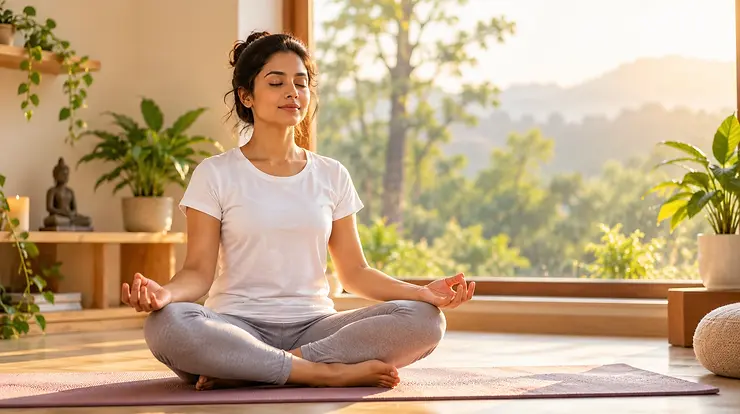
Stress, overthinking, burnout, and poor sleep rarely show up one at a time. Most students who come to me asking about yoga for mental health are dealing with all four at once, and looking for something that works on the mind directly rather than just the body. At Yogavijnana, I've always treated yoga as a science of the mind as much as a physical practice, which is really the whole point of the tradition it comes from. In this guide, I'll walk through how yoga actually affects the nervous system and mood, which practices to start with, and how to build a routine that fits a genuinely busy life.
Quick answer: Yoga can improve mental health by regulating the nervous system, lowering physical stress responses, and building the kind of body and breath awareness that makes it easier to notice and manage difficult emotions. The combination of movement, breath, and short meditation tends to work better than any one piece alone, especially when practiced consistently.
What Is Yoga for Mental Health?
Yoga for mental health is the deliberate use of yoga's tools including asanas or postures, breathing or pranayama, and meditation and many more, to support emotional and psychological wellbeing, rather than purely physical fitness. It's less a separate style of yoga and more a lens on practices that already exist within the tradition.
Classical yoga actually describes eight limbs, not just poses. Asana (posture) and pranayama (breath control) prepare the body and nervous system, while dhyana (meditation) works more directly on the mind, and all eight were always meant to work together rather than as isolated techniques.
That's really the line between yoga as exercise and yoga as a mental wellbeing practice:
Yoga as exercise focuses on strength, flexibility, and physical fitness, at least the way the world sees it.
Yoga as a mental wellbeing practice uses the same postures, plus breath and stillness, with the nervous system and mind as the actual target which is the main purpose of Yoga as well.
Most people get real benefit from both at once, but it helps to know which one you're training on a given day.
How Yoga Improves Mental Health: What the Science Says
Calms the Nervous System
Slow, controlled movement paired with steady breathing shifts the body out of a stress response and toward a calmer, more regulated state. A systematic review of slow-breathing research found links between slow breathing and higher heart rate variability, a marker of stronger calming (parasympathetic) activity, along with greater relaxation and lower anxiety, though the authors present the mechanisms as a hypothesis that is still under debate [1]. A systematic review of 25 randomized trials also concluded that yoga is associated with better regulation of the body's stress-response systems, again describing the evidence as preliminary [2].
Lowers Stress Hormones
Cortisol, the body's primary stress hormone, tends to run high and follow an irregular daily pattern under chronic stress. A meta-analysis of 42 studies found that yoga was associated with lower waking and evening cortisol, along with lower resting heart rate and systolic blood pressure [3].
Improves Mood and Emotional Regulation
Reviews of randomized trials point in a promising direction. A 2018 meta-analysis of eight trials found a small short-term benefit of yoga for anxiety compared with no treatment, and concluded that yoga might be an effective and safe option for people with elevated anxiety. The evidence for diagnosed anxiety disorders was inconclusive [4]. A 2024 meta-analysis on depression found lower depression severity compared with passive controls, and higher remission rates, although the certainty of the evidence ranged from moderate to very low [5]. Earlier work reached a similar conclusion, linking yoga with fewer anxious and depressive symptoms and calling the evidence preliminary [2]. The benefit builds with regular practice rather than overnight.
Builds Mind-Body Awareness
Interoception is the ability to sense what is happening inside your own body, like tension, shallow breathing, or a racing heart. Researchers who study it propose that contemplative practices, such as yoga and meditation, may help people read these signals with less bias and a greater sense of presence and control [6]. That early noticing is often what gives you the chance to respond to stress instead of being overwhelmed by it.
Supports Better Sleep
A 2020 meta-analysis of 19 randomized trials in women with sleep problems found that yoga improved sleep quality compared with control groups. The authors noted low study quality and high variation between trials, and no clear benefit was seen for insomnia severity in the three trials that measured it, so it is encouraging rather than conclusive [7]. Calming practices in the evening appear to help the nervous system wind down in a way that makes falling asleep easier.
Mental Health Benefits of Yoga
Benefit | How Yoga Supports It | Main Practice |
Stress reduction | Shifts the body out of a stress response [2][3] | Slow asana, deep breathing |
Anxiety relief | Builds a physical tool for restlessness and racing thoughts [1][4] | Pranayama, grounding asanas |
Improved mood | Associated with reduced symptoms in multiple studies [4][5] | Regular asana practice, meditation |
Sharper focus | Trains sustained, single-pointed attention, with small to moderate gains on attention measures [8] | Trataka, balance poses |
Resilience | Builds a practiced response to stress over time | Consistent, varied practice |
Better sleep | Calms the nervous system before bed, and is associated with better sleep quality in some studies [7] | Gentle evening practice, meditation |
Self-esteem | Non-competitive progress at your own pace | Any consistent practice |
Best Yoga for Mental Health: Top Practices to Start With
There's no single practice that is "the best" for everyone. What matters more is matching the practice to your current state: how wound up, tired, or restless you actually are.
In Ashtanga Yoga, the eight-limbed path described by Patanjali, several stages work directly on the nervous system and the mind. These tend to be the most reliable starting points for mental health, since they prioritize steadiness over physical intensity.
Practice | Stage of Ashtanga Yoga | Best For | Intensity | Beginner-Friendly? |
Asana (steady, comfortable postures) | Asana | Releasing physical tension held from stress, building a foundation | Low to moderate | Yes |
Pranayama (breath regulation) | Pranayama | Anxiety, racing thoughts, quick reset | Low | Yes |
Relaxation practices | Pratyahara (turning attention inward) | Sleep, deep rest, nervous system recovery | Very low | Yes |
Trataka (steady gazing) | Dharana (concentration) | Overthinking, scattered attention | Low | Yes, with guidance |
Meditation | Dhyana (meditation) | Emotional awareness, calm | Low | Yes, with guidance |
Yoga for Specific Mental Health Concerns
Yoga is a complementary practice, not a replacement for professional mental health care. If you're dealing with a diagnosed condition or significant distress, please work with a doctor or mental health professional alongside anything below.
Anxiety
Anxiety often shows up physically first: a tight chest, shallow breathing, racing thoughts that won't slow down. Slow breathing is associated with greater relaxation and lower anxiety in the research [1], which makes it a practical tool to reach for in the moment. It isn't a cure, but it's a genuinely useful one to have. Our Pranayama Workshop teaches these techniques in depth, with guidance on using them safely.
Depression and Low Mood
Low mood can make movement and routine feel harder to start, which is exactly where gentle, consistent practice tends to help most, not through intensity, but through small, repeatable wins and a non-judgmental space to show up in. Group practice adds a layer of connection that solo coping strategies don't always offer. A 2024 meta-analysis found yoga associated with lower depression severity and higher remission rates, though the certainty of the evidence was low to very low for several outcomes [5]. If low mood is persistent or affecting daily life, please also speak with a doctor. Our Regular Group Classes offer that steady, supportive structure.
Stress and Burnout
Burnout tends to build slowly through long hours, poor boundaries, and too little recovery time, and it rarely resolves with willpower alone. Yoga won't fix an unsustainable workload, but regular practice can rebuild the recovery capacity that burnout erodes. For teams dealing with this at scale, our Corporate Yoga sessions are built specifically around workplace stress patterns.
Sleep
Poor sleep and a racing mind tend to feed each other. Calming, screen-free practice in the evening gives the nervous system a clear signal that the day is winding down. Breathing practice helps here too: slow breathing is associated with greater relaxation [1], and our Pranayama Workshop teaches these techniques so you can use them as a wind-down practice before bed. Our Trataka Workshop includes a gazing meditation technique that many students use for the same purpose.
Focus and Overthinking
Overthinking is often just attention with nowhere productive to land. Practices that train single-pointed focus give the mind something concrete to hold onto instead of looping. A meta-analysis of randomized trials found small to moderate improvements in attention and executive function with regular yoga practice [8]. The same Trataka Workshop is built around exactly this kind of concentration training.
How to Use Yoga to Improve Mental Health: A Simple 15-Minute Routine
This is a realistic starting structure, not a strict prescription. Adjust timing to what you actually have.
Breath awareness (2 minutes): Sit comfortably and simply notice your breath without changing it.
Gentle movement (3 minutes): Slow neck rolls, shoulder rotations, and a few rounds of gentle forward folds to release surface tension.
Calming poses (3 minutes): Seated forward fold and a supported twist, held without strain.
Pranayama (3 minutes): Slow, extended exhale breathing, letting the exhale run longer than the inhale.
Relaxation (4 minutes): Lie down, close your eyes, and simply rest without trying to achieve anything.
Who this is for: complete beginners, desk workers short on time, and students who want something between classes without committing to a full session.
What Does the Research Say?
Yoga's effect on mental health is one of the more actively studied areas in integrative health research, and the picture is encouraging but not yet conclusive.
Stress and the body: A 2015 review of 25 randomized trials concluded that yoga is associated with better regulation of the body's stress-response systems and with fewer anxious and depressive symptoms, while calling the evidence preliminary [2]. A 2017 meta-analysis of 42 studies found lower waking and evening cortisol, resting heart rate, and systolic blood pressure [3].
Anxiety: A 2018 meta-analysis found a small short-term benefit versus no treatment for people with elevated anxiety, and inconclusive results for diagnosed anxiety disorders [4].
Depression: A 2024 meta-analysis found lower depression severity versus passive controls and higher remission rates, with low to very low certainty for several outcomes [5].
Honest framing matters here: yoga shows genuine promise as a complementary approach, but the studies are varied, often small, and the effects are modest. Results vary by person, and it works best alongside, not instead of, any medical or psychological care you may need.
Yoga for Mental Health Near Me: How to Find the Right Class
Look for a studio with qualified, experienced teachers, small or genuinely beginner-friendly groups, and an instructor who understands that some students may be practicing through a difficult period, not just a busy one.
Quick checklist:
Does the instructor have real, verifiable training, not just a personal practice?
Is there a clear way to get to know the teacher and the approach before you commit? At Yogavijnana, everyone begins with our Fundamentals of Yoga e-learning course.
Is the class size small enough for individual attention?
Does the teacher ask about injuries, conditions, or concerns before you start?
Join a Yogavijnana session or get in touch to find a class near you.
How to Start Your Practice
Start small. Five minutes of breathing is a real practice, not a failure to do more.
Stay consistent. Three short sessions a week beats one long session you dread.
Choose gentle practices first. Build the habit before chasing intensity.
Practice around the same time daily. It removes the daily decision of when, which removes a barrier to actually doing it.
Track your mood, loosely. Even a one-word note after each session helps you notice patterns over weeks.
Frequently Asked Questions
Which type of yoga is best for mental health?
Rather than one named style, the best fit is usually a mix of the stages of Ashtanga Yoga that work most directly on the mind: gentle asana, pranayama, relaxation, concentration, and meditation. They tend to work best together, though the right fit depends on your current state.
Can yoga help mental health?
Yes, as a complementary practice. Research links regular yoga to reduced stress, improved mood, and better nervous system regulation, alongside, not instead of, any professional care you need.
Can yoga reduce overthinking?
Often, yes. Practices that train single-pointed focus, like pranayama or Trataka, give an overactive mind something concrete to hold onto.
Which yoga is best for anxiety?
Slow pranayama with extended exhales is usually the fastest-acting tool, with gentle asana and meditation supporting longer-term regulation.
What is better for mental health, yoga or pilates?
They serve different goals. Pilates focuses mainly on physical core strength and control, while yoga explicitly incorporates breathwork and meditation aimed at the nervous system and mind, which is why it tends to be the better fit specifically for mental health goals.
Why is yoga so good for mental health?
Because it combines three things that each help on their own, movement, breath regulation, and focused attention, into one consistent practice, rather than asking you to manage stress through willpower alone.
Is yoga enough on its own for anxiety or depression?
For mild, everyday stress, often yes. For a diagnosed condition or significant distress, yoga works best as a complement to professional care, not a replacement for it.
Conclusion
Yoga's real value for mental health isn't any single pose or breathing technique. It's the combination of a calmer nervous system, a steadier mood, and the body awareness to catch stress before it builds. Start with ten to fifteen minutes a few times a week, and give it a few weeks before judging whether it's working.
References
[1] Zaccaro A, Piarulli A, Laurino M, Garbella E, Menicucci D, Neri B, Gemignani A. How breath-control can change your life: a systematic review on psycho-physiological correlates of slow breathing. Frontiers in Human Neuroscience. 2018;12:353. https://doi.org/10.3389/fnhum.2018.00353
[2] Pascoe MC, Bauer IE. A systematic review of randomised control trials on the effects of yoga on stress measures and mood. Journal of Psychiatric Research. 2015;68:270-282. https://doi.org/10.1016/j.jpsychires.2015.07.013
[3] Pascoe MC, Thompson DR, Ski CF. Yoga, mindfulness-based stress reduction and stress-related physiological measures: a meta-analysis. Psychoneuroendocrinology. 2017;86:152-168. https://doi.org/10.1016/j.psyneuen.2017.08.008
[4] Cramer H, Lauche R, Anheyer D, Pilkington K, de Manincor M, Dobos G, Ward L. Yoga for anxiety: a systematic review and meta-analysis of randomized controlled trials. Depression and Anxiety. 2018;35(9):830-843. https://doi.org/10.1002/da.22762
[5] Moosburner A, Cramer H, Bilc M, Triana J, Anheyer D. Yoga for depressive disorder: a systematic review and meta-analysis. Depression and Anxiety. 2024;2024:6071055. https://doi.org/10.1155/da/6071055
[6] Farb N, Daubenmier J, Price CJ, Gard T, Kerr C, Dunn BD, Klein AC, Paulus MP, Mehling WE. Interoception, contemplative practice, and health. Frontiers in Psychology. 2015;6:763. https://doi.org/10.3389/fpsyg.2015.00763
[7] Wang WL, Chen KH, Pan YC, Yang SN, Chan YY. The effect of yoga on sleep quality and insomnia in women with sleep problems: a systematic review and meta-analysis. BMC Psychiatry. 2020;20(1):195. https://doi.org/10.1186/s12888-020-02566-4
[8] Gothe NP, McAuley E. Yoga and cognition: a meta-analysis of chronic and acute effects. Psychosomatic Medicine. 2015;77(7):784-797. https://doi.org/10.1097/PSY.0000000000000218


Comments